By Josh Rogers | St. Johns County, FL Real Estate Agent
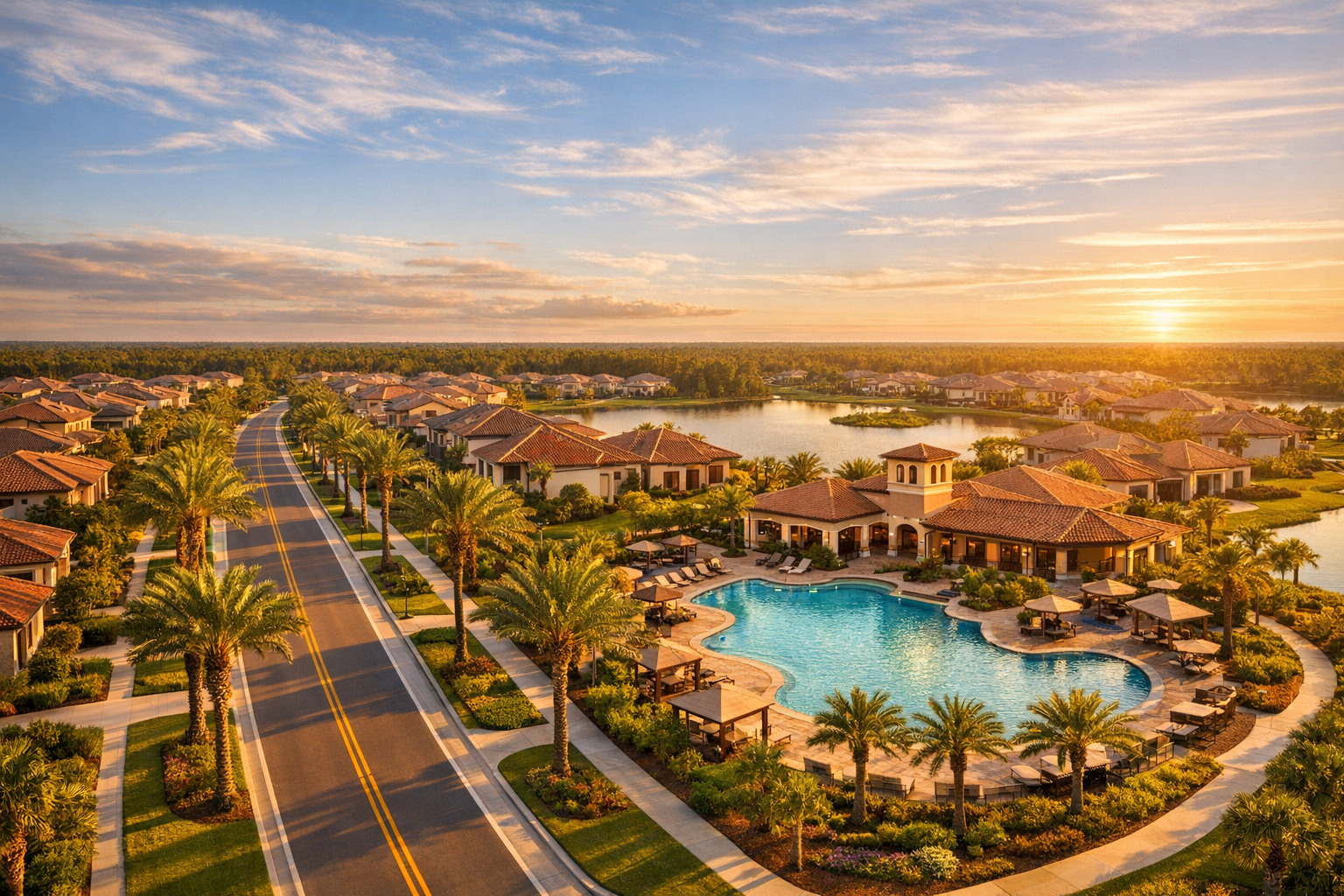
For a deeper comparison, start with our full Nocatee community guide, our full RiverTown community guide, and our full Silverleaf community guide before you decide which community fits you best.
The Number That Surprises Almost Every Out-of-State Buyer
One of the biggest financial surprises for people moving to St. Johns County is the impact CDD fees can have on the true monthly cost of owning a home.
Most buyers from New Jersey, New York, Pennsylvania, or California find a house they love, run the numbers on the mortgage, and feel good about the monthly payment — then discover there’s a line item on their tax bill they never accounted for. Sometimes it’s $800 a year. Sometimes it’s $3,500.
That’s a CDD fee. And if nobody explains it to you before you buy, it can throw your entire budget off.
This guide is going to tell you exactly what CDD fees are, which communities in St. Johns County have them, what they actually pay for, and how to factor them into your decision before you make an offer.
Table of Contents
- What Is a CDD Fee?
- CDD Fees vs. HOA Fees — They’re Not the Same Thing
- Which St. Johns County Communities Have CDD Fees?
- What Do CDD Fees Actually Pay For?
- How Much Are CDD Fees in St. Johns County?
- CDD Fees and Your Mortgage — What Lenders Don’t Always Explain
- Are CDD Fees Worth It?
- What to Ask Before You Make an Offer
- Frequently Asked Questions
What Is a CDD Fee?
A CDD — Community Development District — is a special-purpose government entity created under Florida law to finance and manage the infrastructure of a large master-planned community.
When a developer builds a major community like Nocatee, RiverTown, or Shearwater, they need to fund roads, utilities, drainage systems, parks, and amenity centers upfront — long before homeowners move in. Instead of paying for all of this out of pocket, developers create a CDD and issue government bonds to finance the construction.
Those bonds get repaid over time — typically 15 to 30 years — by the homeowners who buy in the community. That repayment shows up on your annual property tax bill as a CDD fee.
Here’s the important part: a CDD is a government entity, not a private association. That’s what makes it fundamentally different from an HOA.
CDD Fees vs. HOA Fees — They’re Not the Same Thing
This is the most common point of confusion for out-of-state buyers, and it matters.
HOA fees are paid to a private homeowners association. They cover things like lawn maintenance in common areas, community management, pool upkeep, and enforcing neighborhood rules. You pay these monthly, directly to the HOA.
CDD fees are paid to a government district. They appear on your annual property tax bill — not as a separate monthly payment. They cover the original infrastructure investment: roads, utilities, parks, and amenity construction.
In most St. Johns County communities, you’ll have both. A CDD fee on your tax bill and a monthly HOA payment. Buyers who budget only for the mortgage and HOA sometimes get surprised when their first tax bill arrives.
| CDD | HOA | |
|---|---|---|
| What it is | Government bond repayment | Private association dues |
| How it’s paid | Annual property tax bill | Monthly payment |
| What it covers | Infrastructure & amenities built at development | Ongoing maintenance & community rules |
| Can you opt out? | No | No |
| Goes away? | Yes — when bonds are paid off (15-30 years) | No |
One silver lining: CDD fees do go away eventually. Once the bonds are paid off, the fee either disappears or drops significantly. HOA fees don’t work that way.
Which St. Johns County Communities Have CDD Fees?
Most of the larger master-planned communities in St. Johns County have CDD fees. Smaller established neighborhoods generally don’t.
Communities with CDD fees:
- Nocatee
- RiverTown
- Shearwater
- Beacon Lake
- Beachwalk
- Julington Creek Plantation
- Durbin Crossing
Communities without CDD fees:
- Silverleaf
- Smaller established neighborhoods outside large amenity-centered developments
Important: Always verify the exact CDD fee for any specific property with the St. Johns County Tax Collector before making an offer. The CDD fee will appear as a separate line item on the property’s tax bill.
What Do CDD Fees Actually Pay For?
This is where buyers often feel better once they understand the full picture. CDD fees aren’t money disappearing into a void. In most communities they funded:
- Roads and streetscapes — the wide, beautifully landscaped streets you drove through when you toured the community
- Utility infrastructure — water, sewer, and drainage systems
- Parks and green spaces — the trails, dog parks, and open spaces throughout the community
- Amenity centers — resort-style pools, fitness centers, sports courts, clubhouses
- Environmental mitigation — wetland preservation and stormwater management required by the county
When you move into Nocatee and you’re using that incredible Splash Water Park, the fitness center, the miles of trails — a portion of what you’re enjoying was funded by CDD bonds. The CDD fee is, in many ways, the financing mechanism for the lifestyle.
How Much Are CDD Fees in St. Johns County?
CDD fees vary significantly by community, lot size, and where you are in the bond repayment cycle. Before making any offer, ask your agent to pull the exact CDD fee from the St. Johns County Tax Collector’s website — it will be listed as a separate line item on the property’s tax bill.
As a general rule, expect CDD fees in master-planned communities to range anywhere from a few hundred dollars to several thousand dollars per year depending on the community and your specific lot. The only reliable number is the one tied to the actual property you’re considering.
CDD Fees and Your Mortgage — What Lenders Don’t Always Explain
Here’s something that trips buyers up: CDD fees don’t show up in your mortgage payment.
Your lender calculates principal, interest, taxes, and insurance. The tax estimate they use may or may not accurately account for the full CDD fee — especially if the estimate is based on the current owner’s tax bill, which could be different from what you’ll pay as a new buyer.
Always ask your lender to use the full projected tax bill including the CDD fee when calculating your monthly payment estimate. And always verify the exact CDD fee yourself before making an offer.
A significant difference in your actual housing cost vs. your estimated housing cost is the kind of thing that makes buyers feel blindsided at closing — or worse, financially strained after they move in.
Are CDD Fees Worth It?
Honestly? It depends on the community and what matters to you.
The case for CDD communities:
- World-class amenity packages you’d never get in a standard subdivision
- Well-maintained infrastructure, roads, and landscaping
- Resort-style lifestyle at a fraction of what a private community would charge
- The fee does go away when bonds are paid off
The case against:
- Adds real cost to your monthly budget that’s easy to overlook
- You’re paying for amenities whether you use them or not
- In newer phases, you could be paying for 25-30 more years
For most relocation buyers moving to St. Johns County from the Northeast, the trade-off is worth it. The lifestyle and amenity package of places like Nocatee or RiverTown are genuinely exceptional — and the CDD fee is the mechanism that made it possible.
But you should go in with eyes open. Know the number. Factor it into your budget. And make sure you’re choosing a community because you want the lifestyle it offers — not just because the base home price looked good online.
What to Ask Before You Make an Offer
Before writing an offer on any home in St. Johns County, ask your agent these questions:
- Does this community have a CDD? If yes, what is the current annual fee for this specific lot?
- What is the bond payoff schedule? How many years remain on the CDD bond?
- What is the HOA fee? Monthly? What does it cover?
- What is the total true monthly housing cost when you include mortgage + taxes (with CDD) + HOA + insurance?
- Has the CDD fee increased recently? Has the district had any special assessments?
Your agent should be able to get you exact numbers before you make an offer. If they can’t — or don’t think to offer them — that’s a red flag.
Frequently Asked Questions
Can I negotiate the CDD fee?
No. The CDD fee is set by the district based on your specific lot. It’s not negotiable like a home price.
Does the CDD fee show up on my monthly mortgage payment?
Not directly. It’s collected on your annual property tax bill. However, if you escrow your taxes, your lender will collect a monthly amount to cover it — so your monthly escrow payment will be higher.
Will the CDD fee go away?
Yes — eventually. When the bonds are paid off, the fee either disappears or drops to a smaller maintenance-only amount.
Are CDD fees tax deductible?
The debt service portion (bond repayment) is generally not deductible. The operations and maintenance portion may be deductible as a real estate tax. Consult your tax advisor.
What happens if I don’t pay my CDD fee?
Unpaid CDD fees can result in a lien on your property, similar to unpaid property taxes.
Is there a way to see the exact CDD fee before buying?
Yes. Your agent can look up the current tax bill on the St. Johns County Tax Collector’s website. The CDD fee will be listed as a separate line item.
The Bottom Line
CDD fees are not a scam, a trap, or a reason to avoid St. Johns County. They’re the financing mechanism behind some of the most beautiful, well-amenitized communities in Florida.
But they are a real cost that every buyer needs to understand and account for before making an offer. Know the number. Factor it into your true monthly budget. Ask your agent before you fall in love with a house.
If you have questions about CDD fees in a specific community or want help running the real numbers on a home you’re considering, I’m happy to walk you through it. That’s exactly what I’m here for.

Josh Rogers is a St. Johns County real estate agent and the founder of StJohnsWithJosh.com — the most trusted relocation resource for buyers moving to St. Johns County, Florida. With over 15 years of local experience and 1,500+ buyers and sellers helped, Josh’s goal is simple: give you the honest information you need to make the right decision.
📞 904-417-7926 | ✉️ joshrogers@joshrogersteam.com | 🌐 StJohnsWithJosh.com
Disclaimer: Always verify the exact CDD fee for any specific property with the St. Johns County Tax Collector before making an offer.